Editorial Design & Visual Identity for Literature Magazine
This project involved conceptualizing and designing a complete editorial magazine, including visual identity, typography system, editorial layouts, and original illustrations.
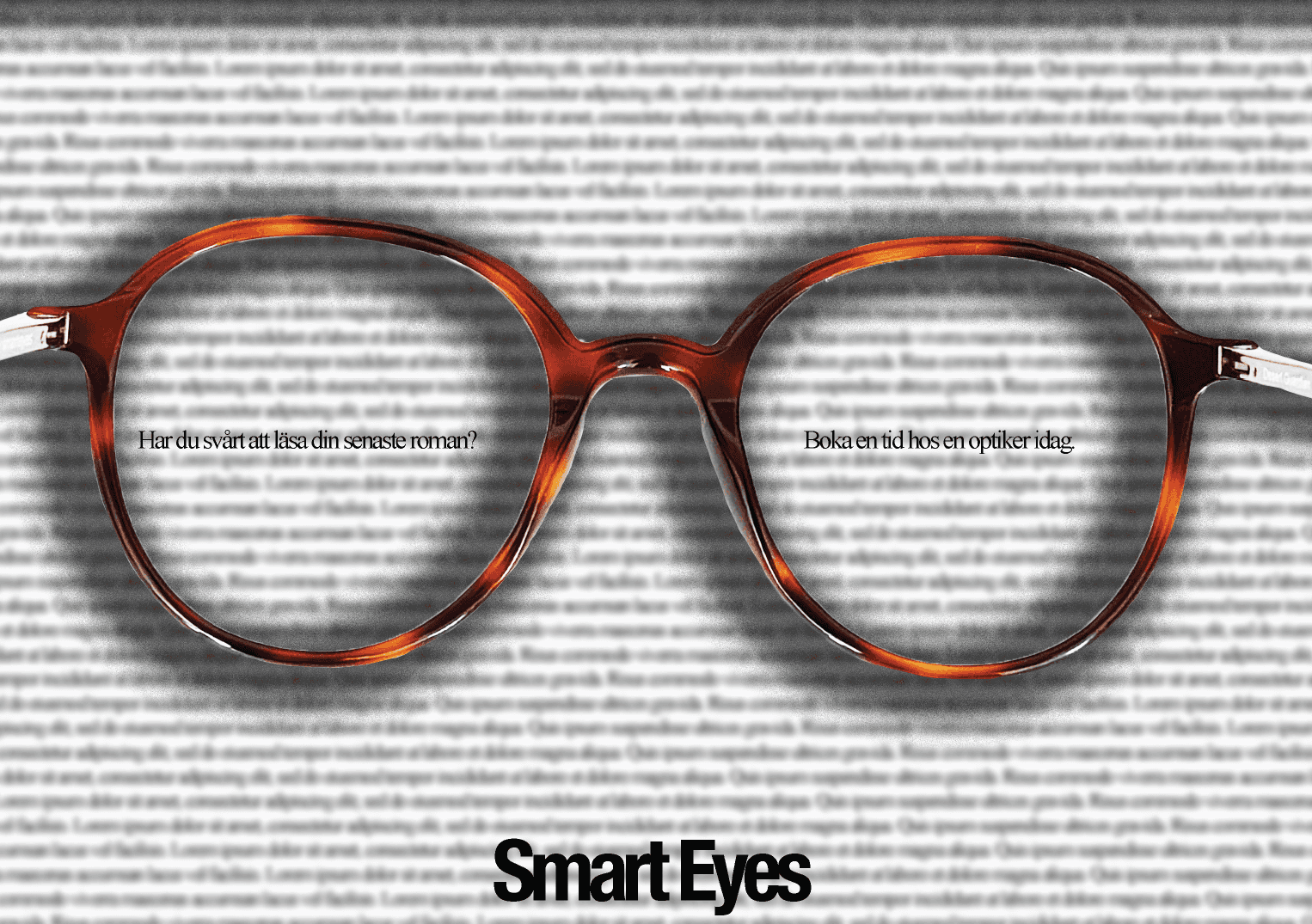
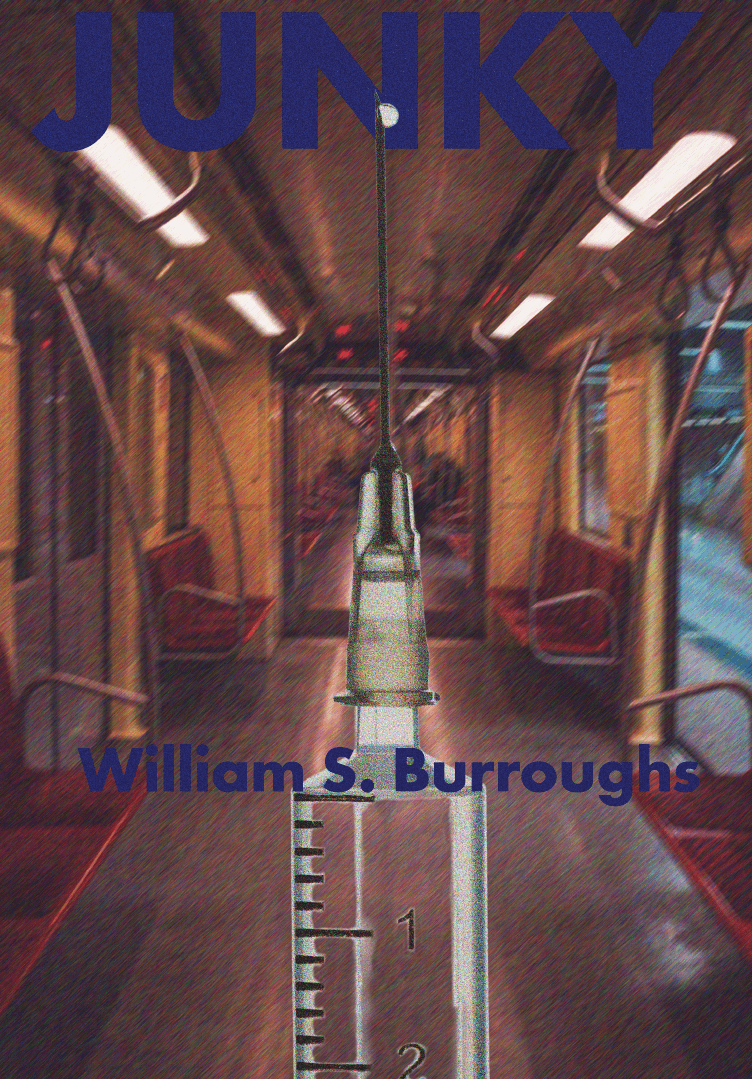
The goal was to create a distinctive and cohesive visual language that reflects the themes and tone of contemporary literature while maintaining readability and editorial clarity.
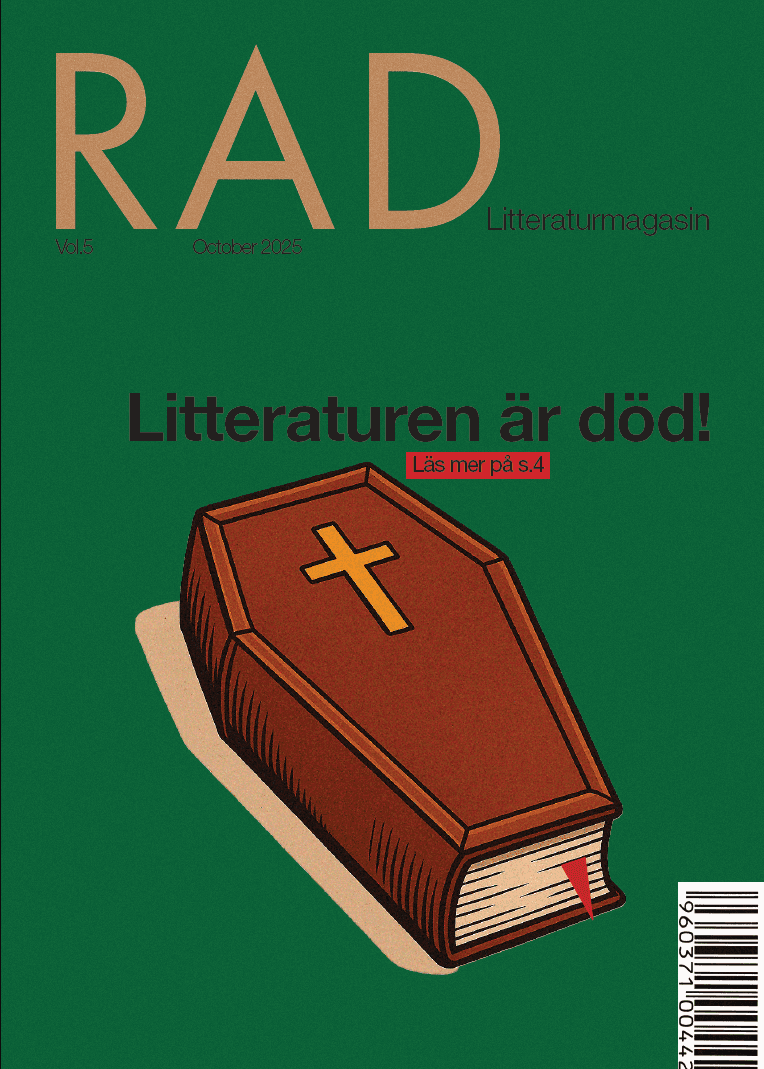
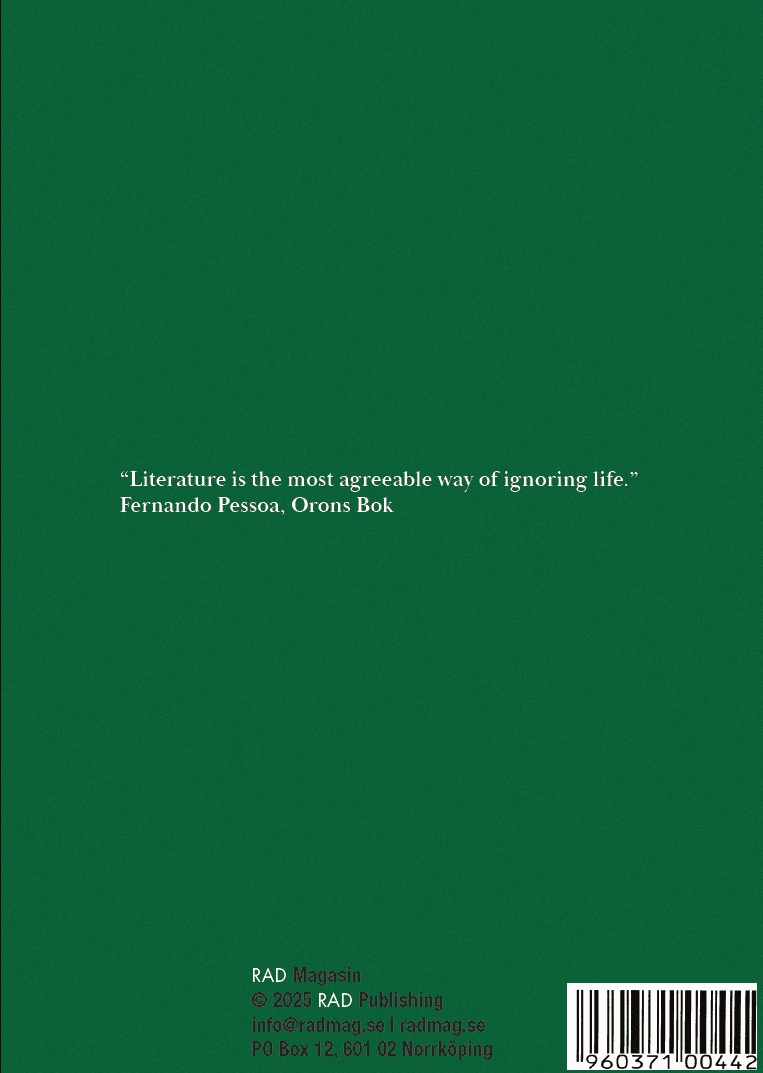
Problem & Design Goal
Editorial publications require a clear visual hierarchy, strong typographic structure, and a consistent visual identity to guide readers through complex textual content. The challenge was to develop a visual system that balances expressive visual storytelling with functional readability.
The goal was to design a magazine that feels visually distinctive while supporting different types of editorial content, including articles, opinion pieces, and data-driven pages.
Visual Identity System
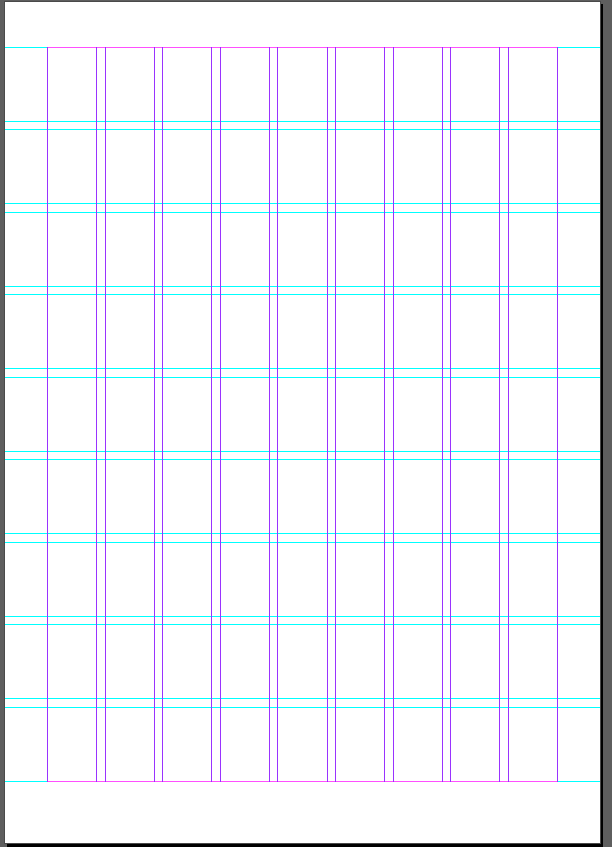
I developed a cohesive visual identity including typography, color palette, layout grid, and editorial hierarchy. The system was designed to be flexible across different content types while maintaining visual consistency.
Key design decisions included:
• Establishing a clear typographic hierarchy for headlines, body text, and metadata
• Creating a grid system for consistent alignment and layout structure
• Developing a visual tone that reflects literary themes and editorial credibility
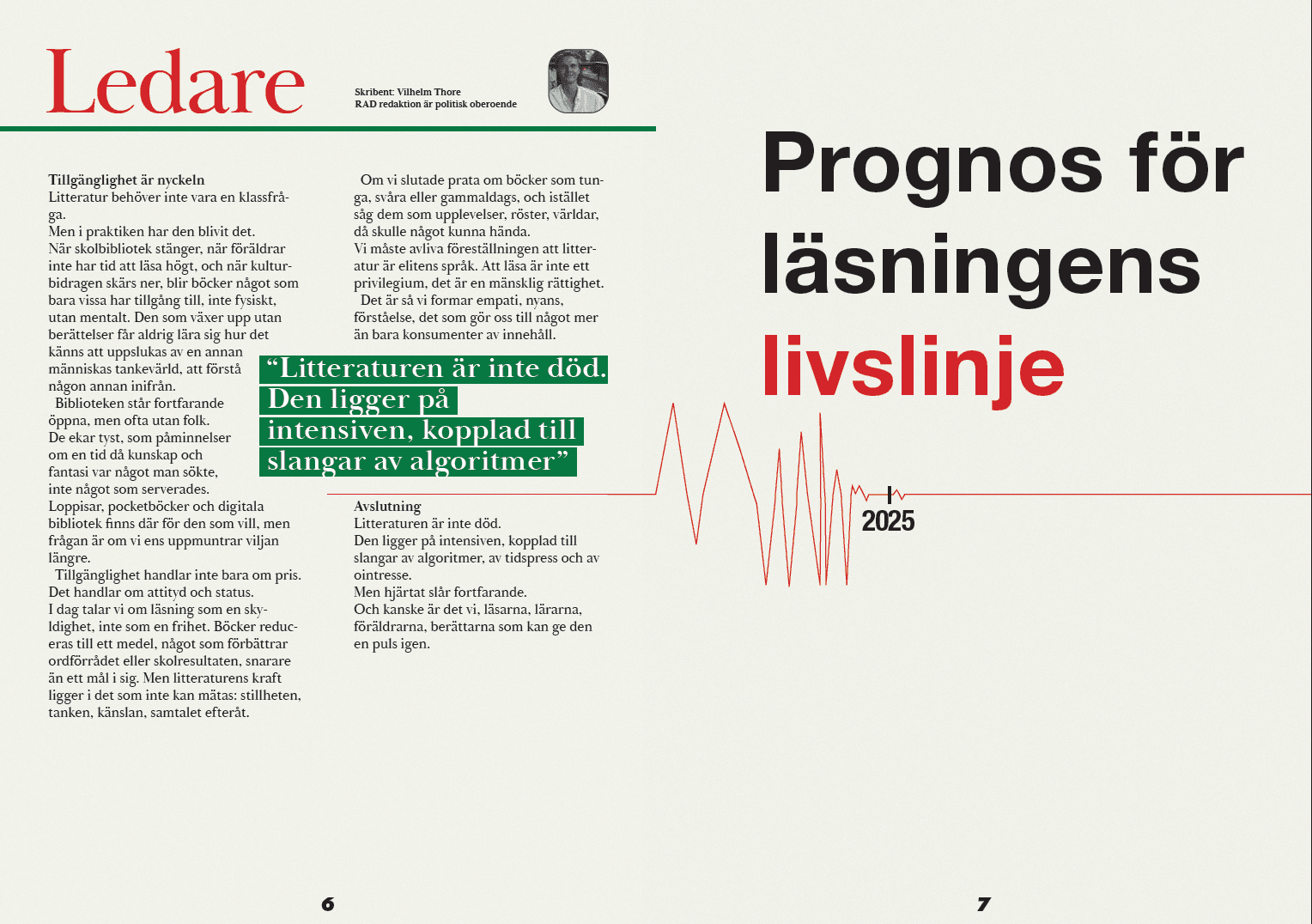
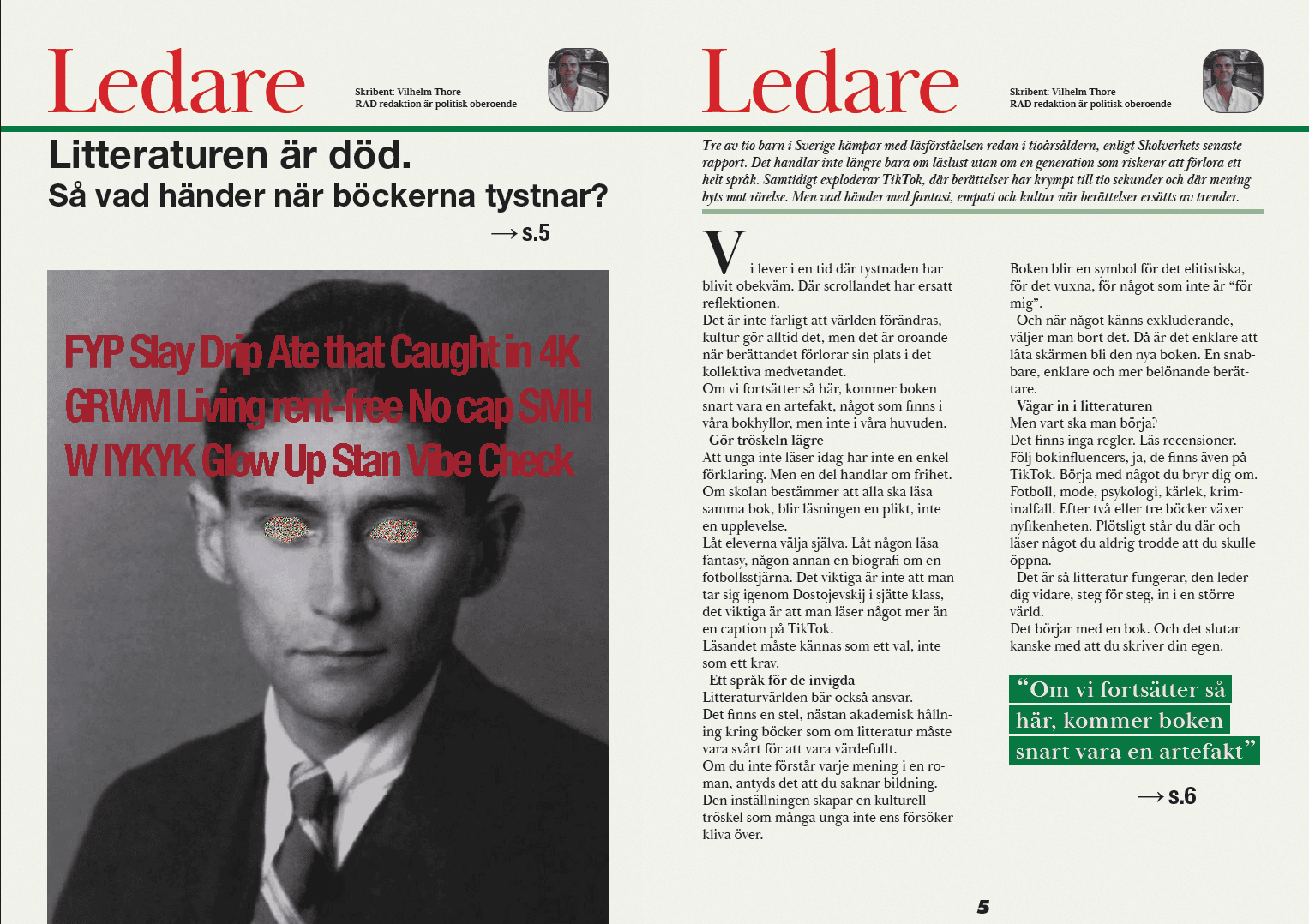
Editorial Layout & Information Design
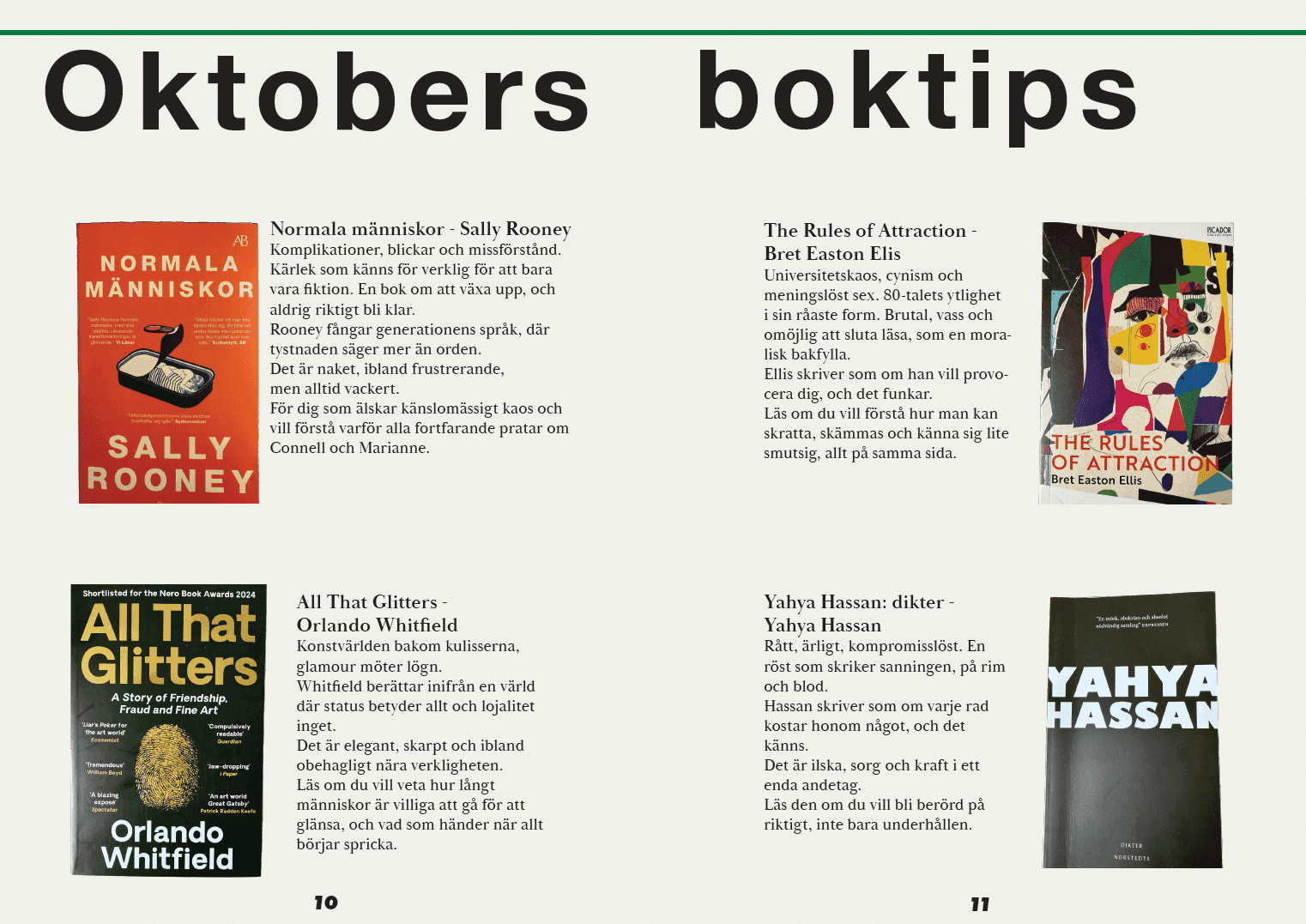
The editorial layouts were designed to guide the reader through content in a clear and engaging way. I focused on readability, spacing, and visual rhythm to improve the reading experience.
Different page types were designed to support varying content structures, including:
• Long-form articles
• Opinion/editorial pieces
• Data-driven or informational pages
The layouts balance structure and flexibility while maintaining visual coherence.
Outcome & Key Learnings
This project strengthened my ability to design cohesive visual systems that support complex editorial content. It improved my understanding of typography, layout hierarchy, and visual storytelling within editorial design.
Key learnings included:
• Designing flexible layout systems using grids
• Applying typography to support readability and hierarchy
• Creating cohesive visual identities across multiple page types
• Balancing expressive visuals with functional information design